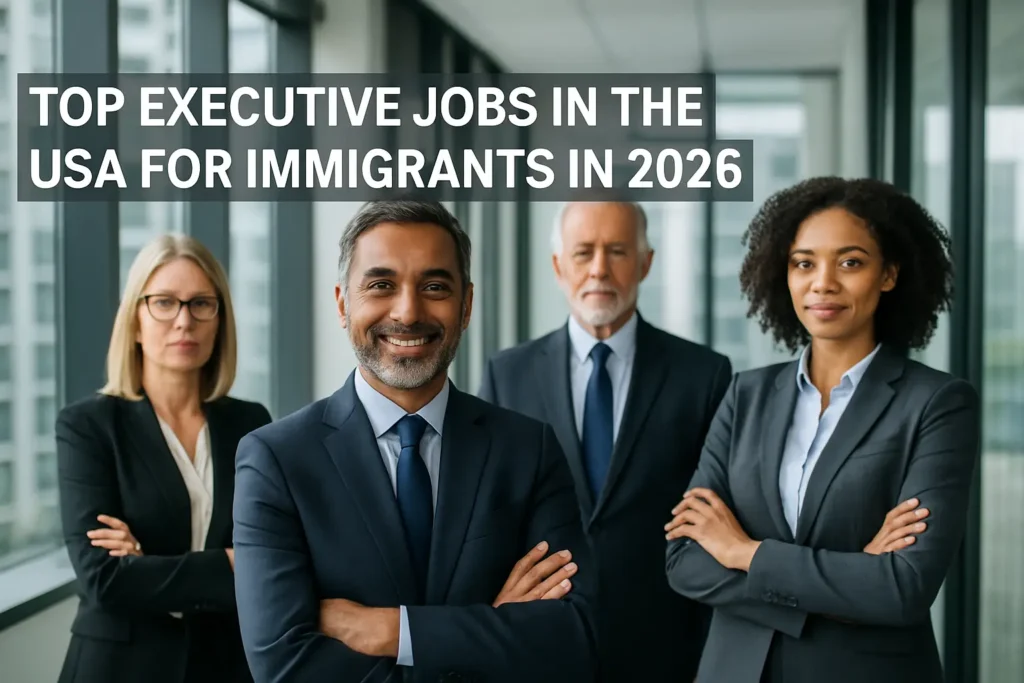
Top Executive Jobs in the USA for Immigrants in 2026
Exploring Executive Opportunities for Immigrants in 2026
In 2026, the United States is expected to witness one of the most competitive yet promising landscapes for executive job seekers — particularly for skilled immigrants seeking leadership opportunities. As globalization continues to redefine industries, U.S. companies will increasingly look abroad for visionary leaders who bring global insight, innovative strategies, and multicultural management skills. For immigrants aspiring to build long-term executive careers, 2026 offers both challenges and opportunities, from high-level corporate roles to possible Green Card sponsorships aligned with talent retention goals.
The rise of global mergers, advancements in technology, and cross-border trade are transforming American corporate infrastructure. With business ecosystems becoming more complex, companies need executives who understand international markets, risk management, and sustainable business models. Immigrants, given their diverse backgrounds, often bring the adaptability and cultural intelligence that set them apart in leadership roles.
Moreover, executive-level immigrants are expected to play a crucial role in sectors such as finance, healthcare, engineering, and technology. Many American corporations are embracing diversity as part of their core leadership strategies, recognizing that multicultural executives lead to greater innovation and improved international collaboration.
In 2026, top executive roles for immigrants will not just be about managing teams — they will involve shaping corporate vision and guiding companies through digital and global transitions. The most successful candidates will be those who combine deep technical knowledge with strong people management and negotiation skills.
Employment trends already indicate that immigrant executives are filling critical gaps in management talent, particularly in industries like AI, cybersecurity, and renewable energy. Companies are willing to provide immigration support, including EB-1C visas and long-term sponsorships, for leaders who can deliver measurable impact.
Executive immigrants who combine professional certifications with U.S.-based education or experience often find themselves at an advantage. Employers value professionals who understand both American work culture and global markets. Furthermore, networking and mentorship within international business circles can open doors to exclusive executive positions.
Another defining factor for immigrant executives in 2026 is the increased flexibility of remote work and hybrid leadership models. Virtual executive teams managing globally dispersed operations are becoming the norm. With this shift, immigration status might become less of a logistical obstacle, provided the candidate demonstrates strategic value.
States like California, Texas, New York, and Illinois are projected to see the highest demand for immigrant executives due to their concentration of multinational corporations. Meanwhile, emerging tech hubs such as Austin, Denver, and Raleigh are rapidly climbing the ranks for leadership opportunities.
Immigrants who wish to compete effectively must focus on continuous learning, advanced leadership training, and executive coaching. Building an impeccable personal brand and showcasing measurable leadership success will be key advantages.
Finally, 2026 will be a turning point where skilled immigrant executives can rise as transformative figures in American enterprises. By blending cultural insight with strategic foresight, they can shape not only their own careers but also the future direction of global industries.
The elite tier of executive roles in 2026 will primarily revolve around strategic innovation and corporate transformation. Immigrants seeking to cross the $280,000 annual salary threshold must target sectors that are rapidly expanding or undergoing substantial restructuring, such as technology, energy, pharmaceuticals, and finance.
Positions like Chief Executive Officer (CEO), Chief Financial Officer (CFO), Chief Technology Officer (CTO), and Chief Sustainability Officer (CSO) will continue to command top compensation packages. These roles not only require strategic decision-making but also demand strong communication across cross-functional global teams.
In addition to base salaries, top executives often earn substantial bonuses, equity options, and long-term incentive plans, pushing their total compensation well beyond $280,000. American companies are increasingly using performance-based pay structures to attract and retain international executives with exceptional track records.
Immigrants who specialize in emerging technologies like artificial intelligence, cloud computing, or renewable energy management may also find specialized C-suite opportunities with salary potentials exceeding traditional sectors. For instance, Chief Data Officers or Chief AI Strategists are now highly sought after due to digital transformation initiatives across industries.
Healthcare is another field where immigrant executives can secure lucrative opportunities. With the U.S. healthcare system facing constant reform, executives who can optimize operations, ensure compliance, and introduce scalable technological solutions are in high demand. Roles like Hospital CEO or Healthcare Operations Director can easily surpass the $300,000 mark.
Financial institutions are also ramping up leadership hiring as globalization impacts risk and compliance standards. Immigrant executives with strong banking, auditing, or fintech experience can negotiate competitive compensation, especially if they bring multilingual capabilities that support international business expansion.
Executives in renewable energy and environmental consulting are seeing pay surges due to corporate sustainability goals and increased regulation. Chief Sustainability and Climate Risk Officers are becoming key figures in boardrooms, with compensation comparable to traditional finance executives.
Another lucrative area is logistics and supply chain strategy. After the global disruptions of the early 2020s, companies have prioritized resilience, driving demand for Chief Supply Chain Officers and high-level global operations directors.
Immigrants who pursue these high-paying roles should be prepared for competitive selection processes. Strong credentials, executive-level communication, and cross-cultural negotiation expertise often become the deciding factors.
By 2026, the intersection of global mobility, digital transformation, and high corporate growth will make the U.S. one of the most rewarding job markets for ambitious immigrant executives seeking both professional and financial success.
Green Card Sponsorship Pathways for Top Executives
Green Card sponsorship remains a key motivator for many talented immigrants pursuing executive careers in the United States. For top executive positions, visa categories such as EB-1C (Multinational Manager or Executive) and EB-2 NIW (National Interest Waiver) are particularly relevant. These programs are designed to attract global leadership talent contributing significantly to U.S. enterprise growth.
The EB-1C category is an attractive pathway for executives who have worked for multinational firms abroad and are being transferred to manage U.S. branches or subsidiaries. This route often leads directly to permanent residence without the lengthy labor certification process.
Executives applying under the EB-2 NIW category may qualify if they demonstrate that their leadership contributions benefit the national economy or public interest. This path gives corporate innovators and entrepreneurs a fair chance to self-petition without employer sponsorship.
For companies, investing in immigrant executives through Green Card sponsorship builds long-term loyalty and ensures continuity in leadership strategy. Employers that align their immigration policies with their global expansion goals often gain an edge in talent retention.
The 2026 landscape will likely see streamlined processes for executive-level immigration due to ongoing reforms aimed at attracting critical managerial expertise. The U.S. government recognizes that sustaining economic growth requires not only skilled workers but also highly capable leaders.
Human Resource teams across Fortune 500 companies are increasingly integrating immigration planning into their executive recruitment models. They use dedicated global mobility programs to manage sponsorship, relocation, and compliance seamlessly.
Immigrant executives should prepare comprehensive portfolios documenting their leadership experience, performance metrics, and evidence of international impact to strengthen their Green Card petitions. Legal guidance and immigration consultants can provide invaluable support throughout the process.
Networking with global professional associations, such as the American Management Association (AMA) or multinational chambers of commerce, can also enhance visibility among companies that regularly sponsor Green Cards for executives.
In addition, dual intent visas such as the L-1A (intra-company transferee) often serve as an initial step before transitioning to permanent residency through the EB-1C route. This strategy allows executives to establish U.S. work history while securing sponsorship.
Smart career planning, combined with targeted immigration awareness, will empower immigrant executives to transition seamlessly from temporary work authorization to permanent leadership tenure in the U.S. corporate ecosystem.
Sectors Driving Demand for Global Leadership Talent
The demand for immigrant executives in 2026 will not be evenly distributed across industries. A few emerging sectors are leading the call for transformative leadership driven by innovation, sustainability, and globalization.
Technology remains at the forefront. With artificial intelligence, machine learning, and cybersecurity defining corporate competitiveness, global leaders who can navigate both technical and ethical complexities are indispensable. Immigrants with deep expertise in data strategy and global tech ecosystems will find unparalleled opportunities.
Healthcare and biotechnology are experiencing tremendous executive turnover due to accelerated innovation and compliance challenges. This has opened the door for immigrant executives specializing in clinical management, pharmaceutical operations, and biotechnology commercialization.
Energy and sustainability are equally critical. As the U.S. transitions toward greener alternatives, executives who can manage large-scale renewable projects, carbon reduction programs, or international supply chains are commanding top salaries and sponsorship incentives.
Finance and fintech continue to be lucrative fields, especially as digital currencies and global payment systems reshape financial infrastructure. Multilingual immigrant executives can help institutions expand into emerging markets, bridging regulatory and cultural divides.
The manufacturing sector is reinventing itself through automation and reshoring strategies. Immigrant executives with expertise in smart manufacturing, robotics, and supply chain logistics are essential in modernizing U.S. production facilities.
Another promising space is education and corporate training, where immigrant leaders can contribute to global workforce upskilling. Their international perspective enhances university and corporate learning initiatives in diversity, leadership, and innovation.
The entertainment and media industry is also globalizing rapidly. Executives with cross-border media experience are increasingly needed to navigate digital streaming expansion, multicultural audience engagement, and international partnerships.
Finally, public policy and international trade organizations are tapping immigrant executives who understand geopolitical nuances and can manage bilateral economic relationships. These roles help shape economic strategy, trade policy, and sustainability agendas.
Across all sectors, the unifying theme is global fluency. The ability to lead diverse teams, negotiate international partnerships, and innovate across cultural boundaries defines the immigrant executive’s advantage in 2026.
Key Strategies to Secure Elite Executive Positions
For immigrants aspiring to secure top executive roles in 2026, preparation and strategy are essential. The path to elite leadership often begins years before landing the position itself. Strategic career planning, reputation building, and global networking are critical components of success.
The first step involves establishing a strong personal brand. This means promoting achievements in previous roles, publishing professional insights, and maintaining thought leadership visibility across platforms like LinkedIn and industry journals.
Networking is the backbone of executive mobility. Immigrants should actively engage in professional associations, attend global conferences, and build mentorship relationships within their industries. U.S. companies often recruit executives through personal referrals and elite networking channels.
Advanced education continues to be a strong differentiator. Pursuing an MBA from a top U.S. or global university, or obtaining advanced certifications such as PMP, CFA, or CPA, enhances both credibility and competitiveness.
Working with executive recruiters and headhunters specializing in immigrant placements can also elevate career prospects. These professionals understand both corporate hiring demands and immigration logistics.
Immigrant executives should prepare tailored executive resumes that highlight leadership outcomes — such as revenue growth, operational efficiency, or market expansion — rather than job responsibilities. Academic achievements should complement real-world impact.
Cross-cultural communication mastery cannot be overstated. Leadership in the U.S. often requires directness, emotional intelligence, and collaborative negotiation. Immigrants who embrace and adapt to these nuances can thrive rapidly.
Staying informed about immigration policy updates ensures readiness to seize visa sponsorship opportunities as soon as they arise. Collaborating closely with immigration attorneys can transform procedural challenges into clear career pathways.
Lastly, resilience and adaptability remain key. Executive success in the U.S. market demands the ability to evolve with change, whether it’s economic uncertainty or digital disruption. Immigrant leaders who demonstrate agility will continue to rise.
The 2026 executive job landscape in the United States is more globally connected than ever before. For ambitious immigrants, it represents a horizon of possibility — where talent, experience, and cultural intelligence converge to open doors to influence, success, and permanent residency. By focusing on high-value sectors, understanding sponsorship channels, and mastering leadership strategies, immigrant executives can secure not only financial rewards but lasting legacies in the world’s most dynamic economy.